Temples of Shyamala Peetha
Shree Meenakshi Amman Temple
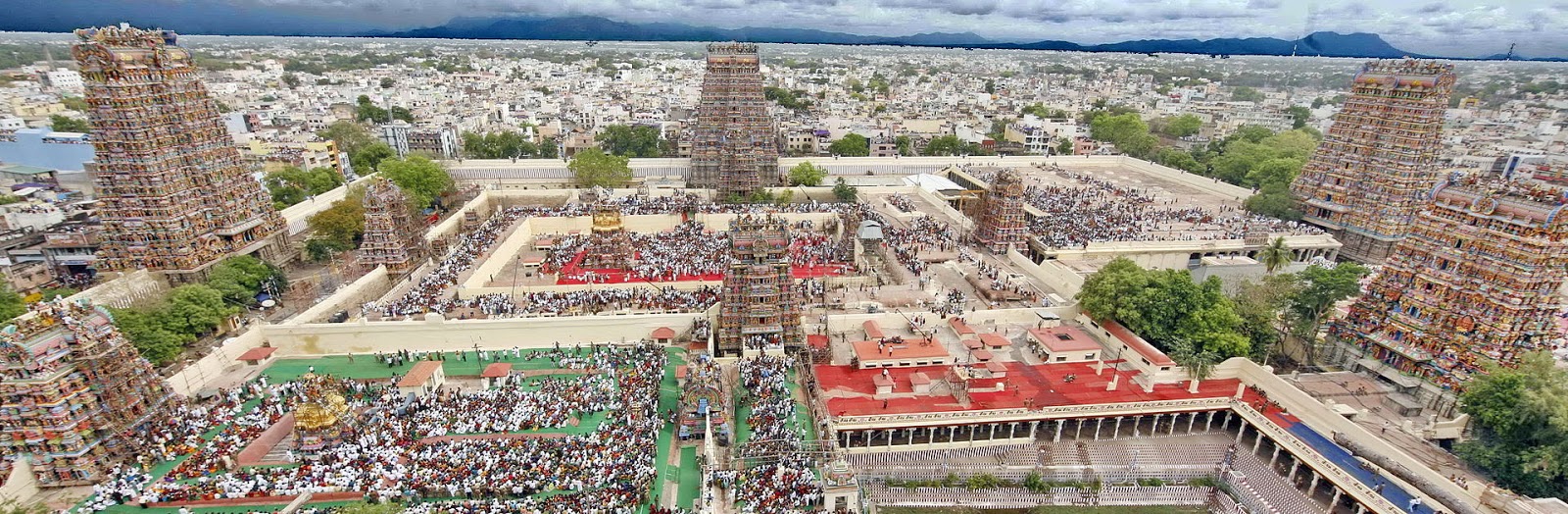
By SR – Own work, CC BY 3.0, https://commons.wikimedia.org/w/index.php?curid=14140355
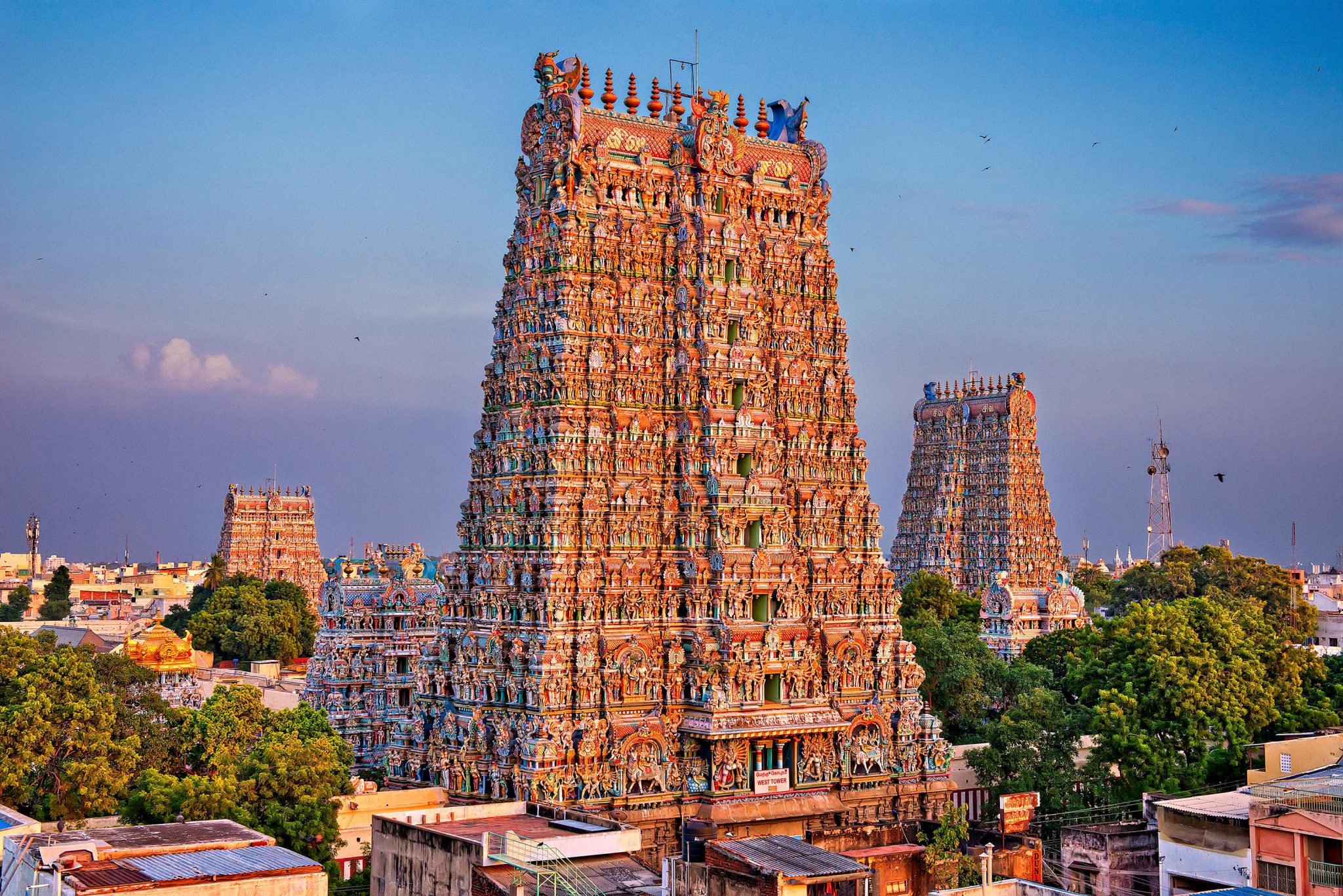
Sree Meenakshi Amman Temple is a world renowned temple and one of the most famous temples in South India. This temple was under the direct ownership and governance of the Madurai Aadheenam until 1865. This huge temple that extends beyond 6 hectares of land is dedicated to Paramasiva as Lord Sundaresvara and is named after His Consort Goddess Parvati as Meenakshi. The temple was constructed by King Kulasekara Pandya. The temple has been mentioned in the songs sung by ancient enlightened poet Saints as early as the 7th century.
The thousand-pillared hall is one of the amazing works in the temple that is famous for architectural brilliance. It is the temple’s museum and the statues here are exquisite.
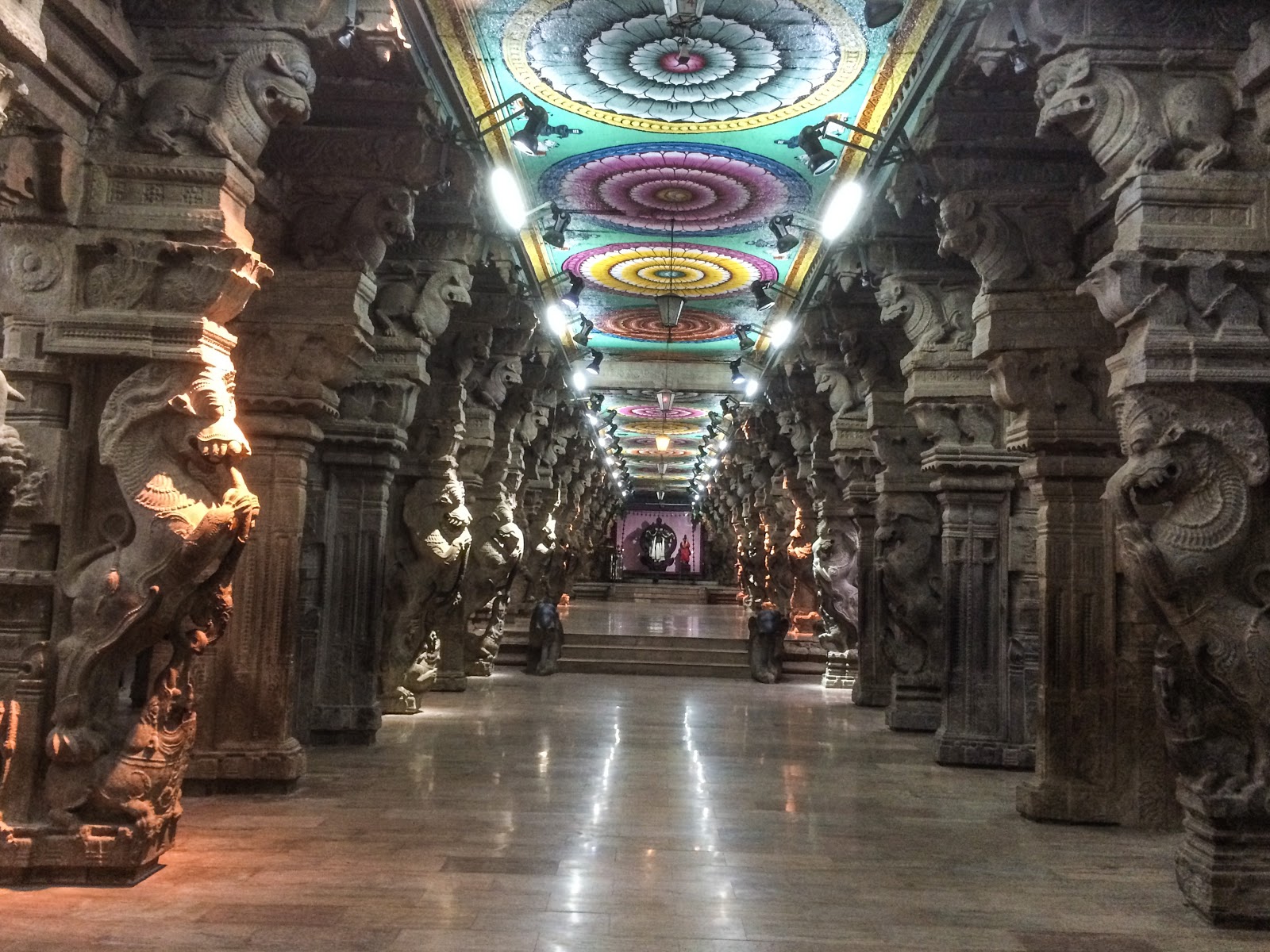
The 1000-pillared mandapam (hall) in the Meenakshi Amman temple in Madura
PURANIC (HISTORICAL) STORY OF MEENAKSI AMMAN TEMPLE
(Ref.: The great of Temple of Madurai Meenakshi published by Joint Commissioner / Executive Officer of Arulmigu Meenakshi Sundareshwarar Temple)
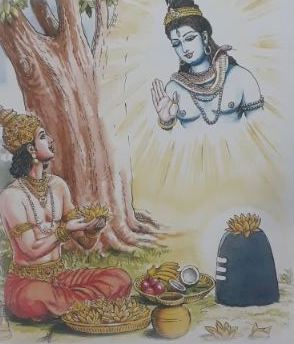
The first happening is the incident where Indra’s (Chief of celestial beings) sin is effaced. The history goes thus: Indra, the Chief of Devas (celestial beings), was engaged in destroying a demon who was terrorising the three worlds for which he waged a war against the Asuras (demons). Unfortunately the demon was a high born Brahmin (scholarly caste of highest order), whose slaying brought upon Indra a grave sin. Indra tried various means to rid himself of the sin, but to no avail. Once, in the realm of humans, passing through a forest of Kadamba trees, Indra felt the burden of the sin being miraculously lifted. Relieved of his sin, he looked for the source and found a Shiva Linga of incomparable beauty and exceptional prowess, in the shades of a Kadamba tree. Next to the tree was a Golden Lily pond, wherein Indra proceeded to cleanse himself by bathing in its waters and offering the golden lily to the Shiva Linga. This golden lily pond is the spot where the Meenakshi temple sacred golden lily pond stands today. It is the water tank of the temple.
Tirupparankundram Murugan Temple
Thiruparankundram Murugan Temple or Subramanya Swamy Temple is a Hindu temple and one of the Six Abodes of Murugan, located at Thiruparankundram. The temple is built in rock-cut architecture and believed to have been built by the Pandyas during the 6th century. According to the legend it is where Murugan slayed the demon Surapadman and married Deivayanai, the divine daughter of the king of heaven, Indra, and he is said to have worshipped Shiva here as Parangirinathar.
The temple is located 8 kilometres (5.0 mi) from Madurai in India. In the main shrine, apart from Muruga, deities of Shiva, Vishnu, Vinayaka and Durga are housed. The temple follows Shaivite tradition of worship. Six daily rituals and three yearly festivals are held at the temple, of which the Kantha Sashti festival during the Tamil month of Aippasi (October – November) being the most prominent.
Thiruparamkundram finds mention in Kanda Puranam detailing the slaying of Surapadman by Muruga. As per Hindu legend, Surapadma, a demon king, once obtained boons from Shiva on account of severe penance. He started ruling the 1008 worlds on account of the power attained. He married Padumakomalai and had several sons. Viramkendiram became his capital, a city created in the seas and he started troubling the Devas. He imprisoned Indra (the king of celestial deities) and also desired his wife Indrani. Indra sought the help of Muruga. Muruga sent his messenger Viravakutevar to the demon, but he was unmoved. A severe battle was fought in Thiruparamkundram where Muruga killed all the sons of the demon except Iraniyan. Surapadman hid under the sea and Muruga split him into two pieces, which went on the become the divine vehicles, peacock and rooster. The day when Muruga slayed Surapadma is celebrated as Skanda Sashti festival in all the Murugan temples.
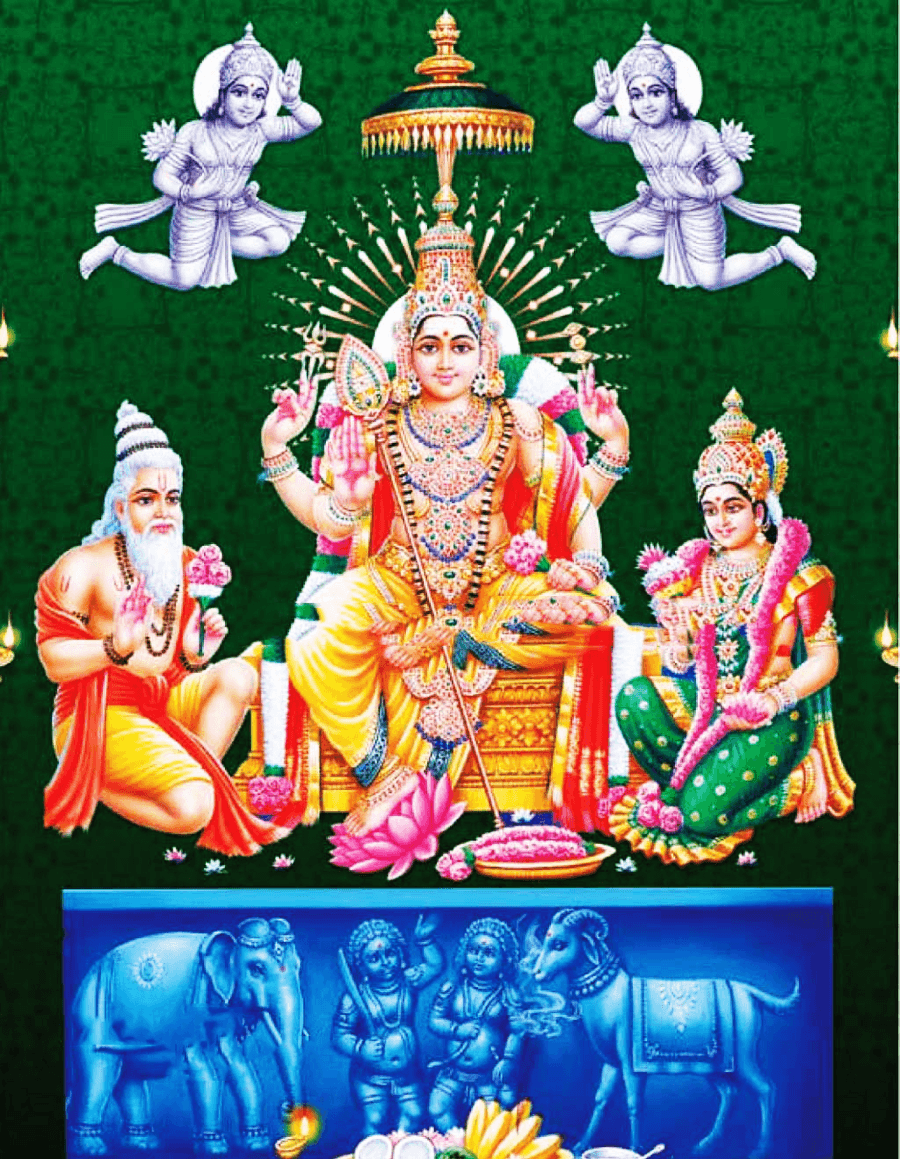
Indra, the king of Devas was impressed and he married Deivayanai, his divine daughter to Muruga at Thiruparamkundram. Muruga is believed to have worshipped Shiva here as Parangirinathar. Kanthar Anoobothi, a treatise of the divine marriage records that Muruga asked all the divine angels and gods who attended the marriage to fly back to heaven in their own vehicles in Mano veham (speed of thought).
The temple is built rock-cut architecture dating back to the Pandya period of 6th century and the life sized sculptures in the mandapas of the Nayaka period during the 16th century. An Aasthaana Mandapa with several artistically carved pillars lead one to the towering 150 feet (46 m) high seven-tiered rajagopuram at the entrance.[4] The granite hill behind the temple is 1,050 ft (320 m) has a shrine of Kasi Viswanatha at the top. The image of Vinayaka in the temple in the temple is sported holding sugarcane and fruits.
The Kambathadi Mandapam, Ardha Mandapam, and Mahamandapam, the three halls leading to the sanctum, are situated at varying elevation. The main shrine is an early rock cut temple which has cells that house the sanctums of Subramanya, Durga, Vinayakar, Shiva and Vishnu. All the statues are carved on the wall of the parankundram rock. The presiding deity shiva is known Parangirinathar and the female deity his consort Parvathi is known as Aavudai Nayaki. Panels depicting Shiva’s dance of bliss are seen outside the sanctum.
A notable feature of this temple is that the Shiva and Vishnu face each other in the main shrine, considered a rare thing in ancient Hindu temples. Outside the temple there is tank, where according to the temple tradition, the fishes are served with salt and rice flakes by the devotees. There is also a Vedic school adjacent to the banks of the temple pond. In front of the Dwajasthambam, the flag staff, there is a carved Nandi, Mayil (peacock) and Mouse (the vehicle of Ganesha). There is a flight of six steps called the “Shadashara Padigal”, before Ardha Mandapam. The rock carvings of Mahisshasura Mardini, Karpaga Vinayagar, Andarabaranar and Uggirar are seen in the hall. There are five divine water bodies, namely, Saravana Poigai, Lakshmi Theertham, Saniyasi Kinaru (well), Kasi Sunai, and Sathiya Koopam
Skanda Shashti festival celebrated during the Tamil month of Aippasi (October – November) is the most prominent festival of the temple. Muruga killing Surapadma is enacted during the last of the six days and the festive image of Muruga is taken in different mounts around the streets of the temple during the festival. Brahmotsavam here falls in the Tamil month of Panguni. The Vishnu named Pavalakanivai Perumal, and Muruga are taken in procession to Madurai to celebrate Minakshi’s wedding (Chittirai festival), with residents of Madurai dressed in festive clothing. Nakkirar’s association with this temple is also celebrated as a festival. Karthigai Deepam festival is also celebrated during the Tamil month of Karthigai by lighting a lamp on top of the hill. Vaikasi Visakam, and the float festival in Thai(Tamil month) are the other festivals celebrated in the temple. Since the image of Vishnu is in the temple, Vaikunta Ekadashi is also celebrated.
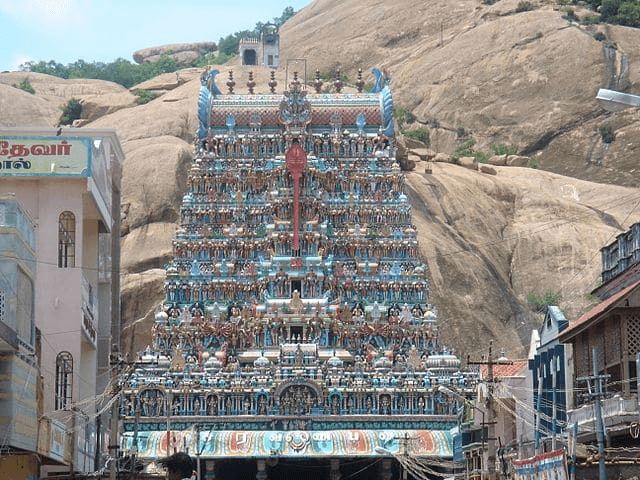
(left) temple tower of Tirupparankundram temple in Madurai
(right) Lord Muruga about to wed Deivanai His Consort at this spot where the temple stands today
Koodal Azhagar Temple
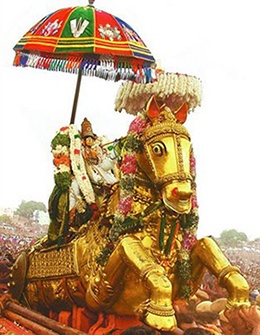
(Pictures: https://www.alagarkoil.tnhrce.in/)
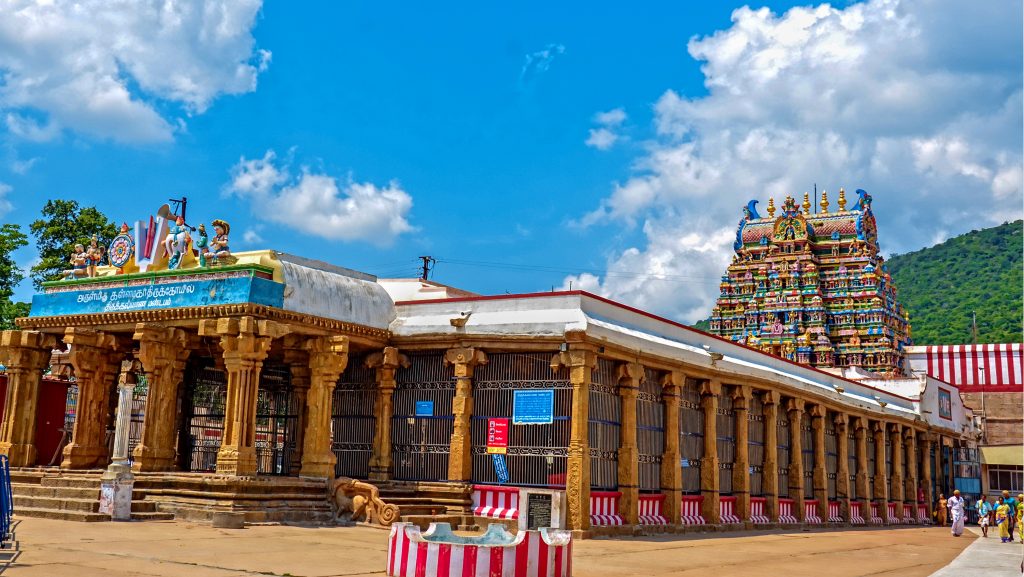
(left) The Koodal Azhagar Temple (right) The deity of Lord Vishnu comes out in procession on a the horse vehicle
Koodal Azhagar Temple in Madurai, a city in the South Indian state of Tamil Nadu, is dedicated to the Hindu god Vishnu. Constructed in the Dravidian style of architecture, the temple is glorified in the Divya Prabandha, the early medieval Tamil canon of the Azhwar saints from the 6th–9th centuries AD. It is one of the 108 Divyadesam dedicated to Vishnu, who is worshipped as Koodal Azhagar and his consort Lakshmi as Mathuravalli.
A granite wall surrounds the temple, enclosing all its shrines. The temple has a five-tiered rajagopuram, the gateway tower. The temple is originally believed to be built by the Pandyas, with later additions by the Vijayanagar and Madurai Nayak kings who commissioned pillared halls and major shrines of the temple during the 16th century.
Koodal Azhagar is believed to have appeared to slay the demon Somuka who abducted the four Vedas. The temple follows Thenkalai tradition of worship. Four daily rituals and three yearly festivals are held at the temple, of which the fourteen-day annual Brahmotsavam during the Tamil month of Vaikasi (May – June) being the most prominent. The temple is maintained and administered by the Hindu Religious and Endowment Board of the Government of Tamil Nadu.
The inscriptions in the temple refer the presiding deity as Koodal Azhagiya Perumal. There are inscriptions in the temple indicating generous gifts and endowments in the form of land, houses and gold to maintain and administer the temple. An inscription from the 8th century indicates the donation of granite stones for the construction of Ardha Mandapa. The temple was expanded during the rule of Madurai Nayaks in the 16th century. The Dwajasthambam madap (flag staff) and mandap before the Hema Pushkarani were constructed by the Nayaks. The temple was renovated by Alagappa Chettiar in 1920.
Koodal Azhagar temple covers an area of about 2 acres (0.81 hectares) and has a five-tiered gopuram (gateway tower) raising to a height of 125 ft (38 m). The temple in enclosed in a rectangular enclosure with huge granite walls. The central shrine has an elevated structure and houses the images of the presiding deity, Koodal Azhagar, in three forms, namely sitting, standing and reclining postures. The image is made of granite is sported in sitting posture and 6 ft (1.8 m) tall. The images of Sridevi and Bhudevi are present in either sides of Koodal Azhagar. The festival deity is named Vyuga Sundararajar and the image is 4 ft (1.2 m) tall made of panchaloha. The vimana, the shrine over the sanctum is Ashtanga in architecture, which has eight parts, namely, Adhistana (base), three Padas(struct), Prashthana (limb), Griva(leading struct), Shikara (cylindrical holder) and Stupi (top portion). The outer parts of the vimana has stucco images of sages, Dasavatara, Bhuvaraha, Lakshmi Narasimha, Lakshmi Narayana and Narayanamoorthy. The vimana is believed to be the work of Vishwakarma, the divine architect. The shadow of the vimana does not fall on the ground. The Ashtanga Vimana is found in Mannar Koil Ambasamudram Uthiramerur, Thirukoshtiyur and Cheranmadevi temples. The inner walls of the sanctum has paintings of Ashtadikpalagas.
The shrine of the consort of Koodal Azhagar, Mathuravalli, is located to the south of the main shrine. There are smaller shrines of Lakshmi Narasimha, Rama, Lakshmi Narayana and Krishna located close to the sanctum. The shrines of Andal, Narasimha and Manavala Mamunigal are found in separate shrines around the first precinct. The shrine of Andal has painting depicting puranic stories and inscriptions detailing devotional literature. The shrines of Garuda, Anjaneya, Ramanuja, Vedanta Desika and Azhwars are found in the second precinct. The pillars in the halls leading to the sanctum have small sculptures. The temple has Navagrahas, the nine planetary deities, in the second precinct. The second floor has a shrine dedicated to Suryanarayana standing along with Devis. The Teppakulam, the temple tank, is located outside the temple premises. It has a centre hall made of granite
The temple follows the traditions of the Thenkalai sect of Vaishnavite tradition and follows Vaikasana aagama. In modern times, the temple priests perform the pooja (rituals) during festivals and on a daily basis. As at other Vishnu temples of Tamil Nadu, the priests belong to the Vaishnavaite community, a Brahmin sub-caste. The temple rituals are performed six times a day: Kalasanthi at 8:00 a.m., Uchikalam at 12:00 p.m., Sayarakshai at 5:00 p.m., and Aravanai Pooja at 6:00 p.m. Each ritual has three steps: alangaram (decoration), neivethanam (food offering) and deepa aradanai (waving of lamps) for both Koodal Azhagar and Mathuravalli. During the last step of worship, nagaswaram (pipe instrument) and tavil (percussion instrument) are played, religious instructions in the Vedas (sacred text) are recited by priests, and worshippers prostrate themselves in front of the temple mast. There are weekly, monthly and fortnightly rituals performed in the temple.
The fourteen day annual Brahmotsavam during the Tamil month of Vaikasi (May – June) is the most prominent festival of the temple. The festive images of the temple are brought in chariot round the streets of the temple in various mounts during all the fourteen days
Pazhamudhir Solai
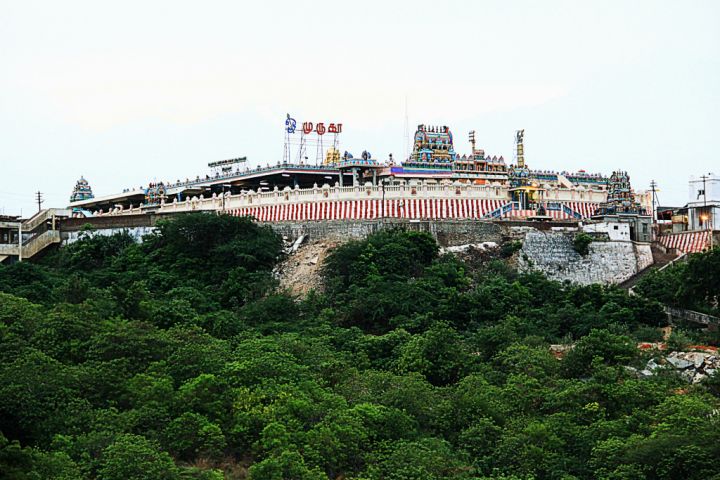
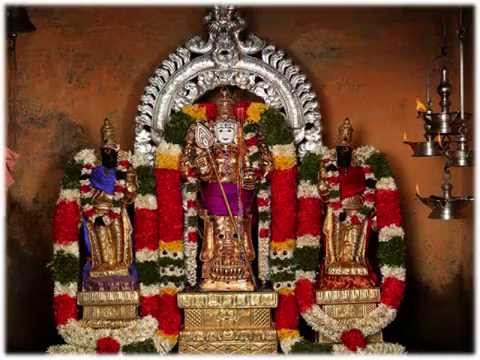
Pazhamudircholai Murugan Temple is a Hindu temple, located about 25 kilometres north of Madurai, India atop a hill covered with dense forests. One of the six important abodes (Arupadaiveedu) of Lord Muruga, it is close to the Vishnu temple of Azhagar Kovil. It is said that the Azhagar Kovil was the actual temple for the main deity of the temple, and the deity was later shifted or relocated to Pazhamudircholai during Thirumalai Nayak’s rule in Madurai.
Pazhamudircholai is a fertile hill, blessed with nature’s bounty in the form of innumerable fruits, vegetables and natural springs. It is a dense forest where Valli is supposed to have lived. The temple itself is relatively small with Valli, Deivayanai, and Lord Muruga in a separate shrine. Lord Ganesha is also present in a separate shrine. There is a Temple Tower and monkeys play around the area. There is another small temple above Pazhamudhir Cholai where local tribes lead their lives.
Although there are hundreds of Temples in Tamil Nadu for Lord Muruga, six particular temples called Arupadaiveedu are very famous among them. Important events in Lord Muruga’s history happened in these places.
Among the Arupadaiveedu, Pazhamudircholai is the last. Lord Muruga at Pazhamudircholai is praised in several works of old Tamil literature such as the Silappathikaram, the Ettuthokai and the Pattupattu.
The great Tamil poet and saint Avvaiyar was tested by Muruga here. In an episode of Divine Play with Avvaiyar, one of the most famous devotees of Muruga, the Lord enacted the following drama. One day Avvaiyar became tired while traveling under the hot sun and sought refuge under the shadow of a fruit tree, hungry and thirsty, when a boy who sitting on the tree asked her whether she wanted fruits from the tree. When Avvaiyar told him that she did, the boy asked Avvaiyar whether she wanted roasted fruits or unroasted fruits. Avvaiyar who was a famous Tamil poet and incredibly knowledgeable litterateur scoffed silently at the very thought of the existence of a “roasted fruit” and decided that the boy didn’t have knowledge even about a fruit. However, tired as she was, she decided that she didn’t want to argue with the boy and asked him to pick unroasted fruits for her, which the boy then proceeded to do. Several fruits fell out of the tree and Avvaiyar picked them up,blowing on them to remove the sand. Smiling, the boy asked Avvaiyar if she was blowing on his “roasted fruits” to cool them.
Avvaiyar was astonished as to how a small village cowboy could have played such an intelligent drama. Blowing on the fruit to remove the sand was indeed poetically comparable to an attempt to cool “roasted fruits”. Humbled by the immense poetic knowledge and clever wordplay of the boy, Avvaiyar begged the boy to reveal his true identity, unable to reconcile herself with the fact that a simple cowherd could have such profound thoughts. The boy then disappeared and in his place, Muruga appeared. Avvaiyar, stunned to find herself in Divine Company, bowed in obeisance and realising the infinite nature of knowledge, prayed to Muruga to bless her and continue bestowing his Infinite Grace on her to aid her virtually endless quest for knowledge.
Temples Of Madurai Aadheenam
Under the divine auspices of Madurai Aadheenam, there are presently four temples in Tamilnadu, South India. Madurai Aadheenam not only serves the temples, but has also been committed to serve the conjoining living communities around them.
Apart from thousands of temples that form the very backbone of India’s spiritual and cultural heritage, these 4 temples are part of a group of 275 temples that, by far, hold the well-kept secrets of the greatest legacies of delicately preserved, grand Vedic Tradition dating back to at least 1200 years in recorded time.
These 4 temples which are power houses of the cosmic energy along with 271 others form the group of temples that are the sacred abodes of Shiva, called “Shiva stalams”. Lord Shiva is eternally established here along with all of His divine energies, His Consort and other energies (called Parivara Devatas meaning “deities of the entourage who assist the main deity at all times”).
Lord Shiva is the manifestation of the highest consciousness, divinity, and the most ancient primeval God worshiped from unknown times. Being Shiva’s own home, these 275 temples are enlightenment ecosystems that bedeck the skies with soaring towers, and fill the land with expansive architectural wonders, sheltering the cities, towns, and hamlets that evolved, spread, and flourished around these temples.
Each of these 4 temples is surcharged with healing, wish-fulfilling, and bliss-granting presence of Paramasiva where He appeared to bless, protect, and shower his boons on His devotees, and remains there. The Lord casually played his “divine leelas” here expressing His unique, different energies. So, each temple is bestowed with that specific energy, eternally. Each deity has its own independent intelligence and specific energy for which it originated, and is invested with that boon-giving energy, and beautifully responds to us.
So, intensely connecting to these temples through prayers, offering worship (puja), and making an ardent pilgrimage to them undoubtedly keeps us in Oneness with the Divine and invoke the spiritual powers in us as shaktis.
The 275 temples are “Paadal Petra Sthalams”

The deities of Tiru Jnanasambandar, Appar, Sundarar alongwith Manickavasagar
No one can reveal the true Story of God, other than His own surrendered devotees. The greatness of these temples was perfectly revealed by the “Thevaram”, the devotional poetic hymns sung in complete love for Shiva by these four poet Saints who are part of the 63 Nayanmars, enlightened devotees of Paramasiva. In the Thevaram, the Nayanmars (servitors of Shiva) sang in sets of 10 verses, known as the Pathikam, in which the sacredness of these temples are vividly glorified with the feats and compassion of Paramasiva.
The 275 energy fields are the fore bearers of the Saiva tradition with amazingly common worship practices across all the temples, even while they are scattered over wide landscapes traditionally termed such as Chola Nadu, Pandya Nadu, Eezha Nadu, and Malai Nadu territories mostly in the present Tamilnadu state. Madurai Meenakshi temple, Chidambaram, Thiruvannamalai, and Rameshwaram form are some of the widely known temples that are Paadal Petra Sthalams, also called Shiva stalams.
The Madurai Aadheenam temples are “Paadal Petra Sthalams” and have been immortalized by the devotional hymns sung in the Thevaram compositions The first three temples received Thevaram songs. The last received Thiruvisaipa songs (also part of the collection of songs sung by the Nayanmars).
The Greatness of Temples, Kshetras (enlightenment ecosystems)

The Supreme Pontiff of Hinduism (SPH) Bhagavan Sri Nithyananda Paramashivam beautifully explains to us the need for temples (also called “kshetra” or pilgrimage spot), the enlightenment ecosystems.
“The infrastructure which comes out of the ecstatic feeling which you are carrying without hurting yourself is what we call Kshetra. Kshetra is not a city. Kshetra means all the citizens are in ecstasy and working out of ecstasy. That is why those great temples that are built are still standing. It creates a Kshetra.
Kshetra are the cities developed by the enlightened beings who were the Raja Gurus, where all policy decisions were taken under their guidance to the regent kings.

A temple is not just the home of God, it is the storehouse of divine energy. It is the place to drop one’s troubles and relax into the deeper meaning of life. The space is like an air strip for one to take off and experience the higher dimensional energy of the Cosmos. Temples are the most important component of the enlightenment ecosystem that keeps the whole thing alive”.
The Madurai Aadheenam temples are such sacred kshetras (energy fields) marked by Lord of Lords, Paramasiva having its own rare historical value, making them centers of spiritual heritage of the planet. Bearing witness to this, the kings and royal lineages of the South – the Pallavas, the imperial Cholas, the Pandyas, the Marathas, and the Nayak rulers of Tamilnadu extended their special patronage to the “Paadal Petra Sthalams” temples.
The temples are radiate sculptural wonders, wall murals and sprawling complexes with inscriptions carved in stone that bear details of the endowments made to them by the royal patron kings and others. Under the divine guidance of The SPH, now the whole kshetra (energy field), these temples and the living community adjoining the villages are witnessing the true revival of the authentic vedic tradition back to a “temple-based enlightened civilization”. That the temples are a grand eternal celebration of existence itself is reshaping with a living incarnation in all its glory, and vibrancy
Following is a brief of the four temples belonging to Madurai Aadheenam.
Sri Agnishwarar Temple, Kanjanoor
The Agnishwarar Temple is one of the sacred abodes of Paramasiva, a “Shivastalam” temple in the village of Kanjanoor, 18 kms north-east of Kumbakonam in the Thiruvidaimarudur Taluk of Thanjavur Dt, Tamilnadu, South India. It is one of the temples under the hereditary trustee of Madurai Adheenam.
The glory of this temple, much like all other Shivathalams, is unspeakable, commanding highest reverence. The temple is witness to many rare incidents of the divine plays (called leelas) of Paramasiva, with the constant presence of Shiva’s surrendered devotees. All these make the Agnishwarar temple a sacred rare energy field, a must visit space for all.
Since Lord Brahma, the Lord of Creation prostrated and prayed at this temple, fulfilling his prayers, it is called “Kanjanoor”, meaning Brahman.
Kanjanoor is considered to be 36th in the series of the “Thevara Sthalams” (shrines that received the hymns of glory by the Nayanmars). It is also one of the nine Navagraha sthalas i.e. temples linked to the 9 planets in the Thanjavur area located in the Kaveri Delta region. It is dedicated to planet Venus, called Sukra. However, the main deity in the temple is that of “Agnishwarar” Lord Shiva. In concordance with the Saivite belief that Shiva is all-pervading, Sukra or Venus is believed to be located within the stomach of the deity of Shiva.
His consort is Devi Karpagambal who is seated in her own sanctum. Her deity is charged with such radiant beauty that only can be experienced by having her direct darshan (vision of her).
Said to be 1400 years old, this grand temple was built by the Medieval Cholas and renovated by the Kings of the Vijayanagar empire. Located in a beautiful, serene hamlet embraced with ample beauty of Mother Nature and vast green fields, the temple stands as a lifeline enlightenment ecosystem for the villagers and people of the surrounding places.

Devi Karpagamba, Epitome of All Beauty and Devotion
The temple has a 5-tier Rajagopuram (main gateway tower) surrounded by two prakarams (closed precincts of a temple).
The Legacies
Lord Brahma (the Lord of Creation, one of the holy Trinities of Vedic Gods) is said to have been blessed with a divine vision of Devi Parvati’s sacred marriage with Lord Paramasiva here. Also, Agni (the Lord of fire) is said to have worshiped Paramasiva here, hence the name “Agnishwarar”.
This shrine is also referred to as “Palaasavanam”, “Brahmapur” and “Agnisthalam”. There are also shrines to Maanakkanjaarar Nayanmar and Kalikkaamar (patron Saint devotees of Paramasiva called Nayanmars) here. Deities of Agnishwarar and Karpagambal are also seen in the Varadarajar Temple at Kanjanoor.
Several legends of events in the life of Haradatta Sivacharyar are linked to this shrine. Haradatta Sivacharyar (a devotee of Lord Vishnu) – originally known as Sudarshanar was born here and went through intense penance (tapas) to prove his unalloyed devotion to Lord Shiva to his fellow Vaishnavites (the followers of Lord Vishnu). Proving the power of his devotion, Haradatta seated himself on an iron stool in the middle of fire to prove Lord Siva as the Ultimate Almighty in this place. There is a separate sanctum dedicated to him in this temple and the linga (Shiva’s column) which he worshiped. This sacred space radiates the intense energy of a surrendered devotee of Shiva, and bestows on us the ultimate blessing of “feeling connection” with Paramasiva.

A Wall Relief depicting the scene of Lord Dakshinamurti teaching Haridatta

A wall sculpture saying “Sri Haridattar Saiva Sthabanam” meaning Haridatta establishing of Shaiva here.
It is said that Haradatta Sivacharyar composed many authoritative Saiva Siddhanta works in Sanskrit here and established “Shivaparathva” here. And so, he has been befittingly praised with the name “Aradattar Periya Mahan” meaning Haradatta is a great Saint. The temple walls carry this history through the beautifully-hued images vividly showing the happenings of all the events.
Images that describe the stories relating to Haradatta Sivacharyar, inscriptions from the Chola and Vijayanagar kings’ periods, and stone images of Natarajar (dancing form of Paramasiva) and Sivakami are etched wonderfully in this temple. The Stone images of Natarajar and Sivakami are in the Nataraja Sabha referred to as the “Mukti Mandapam”.
Another historical incident making this “Shivasthalam” so rare and unearthly is that Paramasiva Himself blessed Paraasara Muni, a great enlightened Sage who is the author of Vishnu Purana, with a vision of His Cosmic Dance – called as Mukti Tandavam (dance of liberation) in this temple. Paraasara Muni is also father of Srila Sri Veda Vyasa, who ascribed the great Indian epic Mahabharata and Srimad Bhagavatam.

Richly hued wall mural on Lord Muruga

Enchanting mural of Lord Shiva with His beloved son Muruga playing on His lap
Temple Facts
Location: Kanjanoor near Kumbhakonam (Chola-North of Kaveri)
Lord Shiva worshiped as : Agnishwarar (Paramasiva)
Ambal (Devi) – Devi Karpagambal, the consort of Agnishwarar
Sthala Vriksham (sacred tree) – Purasamaram (seen in picture)
Teertham (sacred water body) – Agni Teertham, Kaveri
Pathikam (10 glorifying verses) – sung by Appar
Interesting Marvels of the Agnishwarar temple in Kanjanoor
One of the noticeable marvels of this temple is that the the bilva leaf seen here is a 5-leaf cluster, which is unique; normally it being a 3-leaf cluster.
The temple is adorned with eye-locking wall murals art that show Lord Muruga’s life incidents along with Paramasiva’s and other divine energies.
Temple Festivals
A festival to honor Haradatta Sivacharyar is celebrated in the Tamil month of Thai (Jan-Feb) every year. Besides this, Mahasivaratri, Aadi Pooram, Navaratri, and Arudra Darisanam are also celebrated with much importance.
Sri Saatchinatheswarar Temple, Tiruppurambiyam
Saatchinatheswarar Temple or Tiruppurampayam Temple is also one of the ancient Shivasthalams dedicated to Lord Paramasiva located in the Tiruppurampayam, Tamil Nadu, India. Tiruppurampayam is also known as Tiruppirampiyam.
Lord Shiva as “Saatchinathar” – witness to a devotee
How the name Saatchinaathar came to be for the main deity
Once a trader who was returning to Madurai from Kaveri Poompattinam died due to snake bite. As per the prayers of a trader woman who was accompanying him to the lord in this temple, the trader was graced by the Almighty back to life. Also He conducted the marriage of both traders and was a witness to his whole happening. After returning to Madurai with his new wife, his 1st wife abused him and did not accept his 2nd wife. To clear her doubts and show his causeless compassion towards His devotee, the Purampayathu Lord Himself appeared along with the whole set up of the Vanni tree, the well and the temple Madapalli (where the food is cooked in the temple to offer to the Lord) and told the truth as it is and declared himself as a witness to this incident. So, He is called Saatchinatheswarar Swami, the witnessing God in this temple (Saatchi meaning witness).
This entire witnessing Divine play has been mentioned in the epic “Silappathigaaram” as “Vannimaramum, Madapalliyyum saantraga munniruthi kattiya moikuzhalal”, and also wonderfully described in the Perumpatrapuliyar Nambi’s “Thiruvilaiaadar Puranam 62” and Paranjothi Munivar’s “Thiruvilaiaadar Puranam 64”.
Once a trader who was returning to Madurai from Kaveri Poompattinam died due to snake bite. As per the prayers of a trader woman who was accompanying him to the lord in this temple, the trader was graced by the Almighty back to life. Also He conducted the marriage of both traders and was a witness to his whole happening. After returning to Madurai with his new wife, his 1st wife abused him and did not accept his 2nd wife. To clear her doubts and show his causeless compassion towards His devotee, the Purampayathu Lord Himself appeared along with the whole set up of the Vanni tree, the well and the temple Madapalli (where the food is cooked in the temple to offer to the Lord) and told the truth as it is and declared himself as a witness to this incident. So, He is called Saatchinatheswarar Swami, the witnessing God in this temple (Saatchi meaning witness).
This entire witnessing Divine play has been mentioned in the epic “Silappathigaaram” as “Vannimaramum, Madapalliyyum saantraga munniruthi kattiya moikuzhalal”, and also wonderfully described in the Perumpatrapuliyar Nambi’s “Thiruvilaiaadar Puranam 62” and Paranjothi Munivar’s “Thiruvilaiaadar Puranam 64”.
The History

Dating back to the 5th century A.D., the presiding deity of this temple is Paramasiva in his incarnation as Dakshinamurti (one who is facing south), the first-ever guru, who imparted the ultimate spiritual instruction in “deep silence” to the four great saints – Sanaka, Sanandana, Sanatana and Sanat Kumara under the banyan tree on the banks of the Brahma Teertham, facing South.
The temple is one of the rare 24 shrines among the “24 Guru Sthalams” (24 centers dedicated to Lord Dakshinamurti) and is surrounded by Manniyaru river (which supplies water for agriculture), the Kollidam (Northern distributary of the sacred Kaveri river) and the sacred Kaveri river.
The child-incarnation Tiru Jnanasambandar, one of the four visionary poet-saints of the Saiva Siddhanta tradition, performed a number of miracles at this ancient temple, sanctifying and energizing the space.
Lord Brahma, one of the divine holy trinity of Hindu Gods (Paramasiva, Brahma and Vishnu), is also said to have worshiped Paramasiva here. A certain King of the Magadha Desam (a kingdom in South Bihar in India) was cured of the ‘Muyalaka’ disease at this shrine.
Saving the World from the Great Deluge
This temple also has a very special Ganesha deity called Pralayam kaatha Vinayagar meaning the Ganesha (also called Vinayaka) who saved from the great deluge. The temple’s History has it that during the Krita yuga or the Satya Yuga (the Golden Age of Truth), Paramasiva asked his son, Lord Ganesha to save the world from the great deluge. Ganesha created a well on the eastern side of the teetham (temple tank) and channeled all the seven seas into that well, and thus controlled the deluge and saved the world.
Lord Varuna, the God of the oceans, created a deity of Lord Ganesha from sea shells and other materials obtained from the sea and worshiped him as “Pralayam Katha Vinayakar”. Remarkably, even today this Ganesha deity is majestically seated, proving true this extraordinary happening.
As the temple’s shrine stayed unaffected by the great deluge, the name “Purampayam” came into being (puram – meaning outside).
On the night before Vinayaka Chathurthi, a day celebrating the anniversary of His advent, a special abhishekam (sacred oblations) and special decorations to Ganesha with 100 kgs of honey is offered to this Ganesha. The abhishekam with honey is performed throughout the night. It is said that all the honey that is poured during the abhishekam is absorbed by the deity. No abhishekam is performed during the rest of the year.

The well that drank the 7 seas to save the world by Lord Ganesha, Vinayakar
Another pronouncing proof to this grand feat is proven by the temple well that still remains in the temple complex, reminding us to be established in the faith for the divine’s grace and protection for any situation. Praying and offering worship to this “Pralayam Kaatha Vinayakar” naturally brings us under the protective divine umbrella removing any dangers, negativity, obstacles from our life.
The Temple

Sri Sakshinatheswar radiating His Divine Grace as Presiding Deity
The present name of the presiding deity Paramasiva is “Saatchinathar” and His eternal consort, “Kuraivilla Azhagi” (beauty unsurpassed). Legend has it that Paramasiva appeared here as a witness (meaning ‘Saakshi’ or ‘Saatchi’) to defend and protect his devotee, hence the name Saatchinathar.
The sanctum of the Consort of Paramasiva was built by King Rajaraja Chola I. The sanctum wall contains beautiful sculptures of Parivara Devatas (the divine beings who are extensions of Paramasiva). Lord Ganesha, the elephant God is performed honey ablution on the day of Vinayagar Chaturthi and all the honey offered is absorbed.
The Amman (Cosmic Mother) shrine is housed in the 2nd Prakaram (circumambulation) while Paramasiva’s sanctum is reached past the Mahamandapam (the great stage) housing all the relevant Parivara Devatas. Dakshinamurti’s shrine is located on the southern bank of the temple tank. There is also a shrine to Sattanathar (another form of Paramasiva) here.
Sri Kachaneshwara Swami Temple, Kachanam
This Shivastalam (abode of Paramasiva) administered by the Madurai Aadheenam.

Most of the inscriptions here go back to the days of the Imperial Cholas (Parantaka I & descendants), detailing the grants that were made to the temple. There are inscriptions also from the King Raja Raja’s and the Vijayanagar period.
Tiruppurampayam was the fierce battlefield of “Purampaya war” in the 9th century deciding the bright future of the Cholas dynasty. Victorious Chola king Aditya I revived the brick temple into a blue metal stone temple in the sweet remembrance of the turn of the tide in his favor and renamed it as Aditeshwaram. Also this purampaya temple has about 230 acres of agricultural and horticultural farms as mentioned by a stone inscription researcher V.Sadhaasiva Pandara in the Sthala history of Purampayam. His writings about the history of “Tirupurampaya Devasthanam” was published in the year 1946.
Glory of the Temple as sung by the various Poet Saints
The temple is glorified by the hymns of “Thevaram”, the composition of the 7th century great Tamil literature. The temple is the 46th in the series of “Paadal Petra Sthalam”, meaning the 275 temples revered in the verses sung by the most prominent Tamil poet-saints, the chief Nayanmars (servitors of the Lord), namely Tiru Jnanasambandar, Appar and Sundarar
This temple has been mentioned as “Purambayamadhanil Aram Pala Aruliyum” meaning “various good things bestowed by the Tiruppurambiyam temple”, by the poet Saint Manickavasagar in his work “Keerthi Thiruvagaval” of “Tiruvasagam”.
This shrine also has been mentioned in “Tiruvasagam” of Manickavasagar, in the Saint Pattinathar’s works and in the famous ‘Tiruvilayadal Puranam.”
Festivals
There are 4 worship services performed here daily. The festivals celebrated are the annual Brahmotsavam in the Tamil month of Maasi (Feb-Mar), the annual Vinayakar festival with the Tamil month of Avani. Kartikai Deepam, Arudra Darisanam, Vishu, Aadipooram, Navaratri, Skanda Shashti and Thaippoosam are celebrated here.
Temple Facts
Paramasiva worshipped as – Sakshinathar, Sakshinathar
Ambal (Devi, Paramasiva’s Consort) – Karumpadu Solli (Kuraivila Azhagi)
Sthala Vriksham (Sacred Tree) – Punnai
Teertham (sacred water body) – Saptasagara Teertham (well)
Pathikam (10 glorifying verses) by – Jnanasambandar, Appar, Sundarar
Location
Saatchinatheswarar Temple is located near Innambar in Tiruvaiyaru. It is also on the northern banks of the Manni river, approximately 8 kms from the northwest of Kumbakonam.
The History
History goes that Lord Indra, the king of the Gods, deceitfully cheated on Sage Gautama and his wife Ahalya by impersonating him. Overtaken by lust and greed, Indra misusing his powers, took the Sage’s form and spent time with his wife in his absence. Condemning the act of Indra, Sage Gautama cursed him. Though Ahalya was chaste, with a view to get her further purified and liberated by Lord Rama Chandra, the direct incarnation of Lord Vishnu, Sage Gautama converted her into a stone. Devi Ahalya being converted into a stone spiritually signifies the unconscious state, which only the grace of God can destroy. Finally after a long time, she got the ultimate boon of being directly blessed by Lord Rama Chandra, who lifts the most fallen ones and liberates them. On the left is the deity called “Annamalaiyar” Shiva Linga.
For relief from the curse, Indra prayed to Lord Shiva, who advised him to make a Linga of sand and worship it performing abhisheka (offerings made to divine with water, milk and other oblations). Knowing it was not possible to perform the abhisheka to a sand linga, he had to undergo long years of suffering. Finally he worshiped the divine Cosmic Mother, Ambika and while embracing the Linga, he cried aloud to Lord Shiva for forgiveness, deeply repenting his misdeeds.
His fingerprints set on the Linga, as he sincerely prayed, and the Lord granted pardon and blessed him with a vision of “Tyagarajar”, a form of Paramasiva. As Indra’s fingerprints (Kai chinnam-rekhas in Tamil meaning “fingerprints”) were set on the Lord, this Shivalinga is named “Kai Chinneswarar” which came to be pronounced as Kachaneshwarar over time. He graces his devotees along with Mother Palvalai Nayaki.
There is also a shrine to Mahavishnu here, where a deity was discovered while excavating an arable tract of land belonging to the temple.

MahaVishnu’s Deity excavated from temple

Deity of Lord Ganesha at the temple

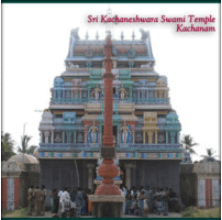
Deity of Medha Dakshinamurti – the Primeval Guru seated south-facing in this temple.

The Temple
The temple is over a 1000 years old, and the presiding deity of the temple is Lord Paramasiva, in the form of a Swayambhu (naturally formed) linga. The great sage, Agastyar, one of the Saptarishis (7 great sages of Hindu History) is also said to have been blessed here by Paramasiva.
The Utsavamoorti (celebration deity) here is called Tyagarajar (a name of Paramasiva). There is a shrine to Rishabha Dakshinamurti here, the same way as in Tiruvaimur in Tiruvarur.
This exquisite temple is a Maadakkoyil (built with a flight of stairs on the side) built at an elevation. It has 2 prakarams (outer precincts) with an attractive Rajagopuram (main gateway tower) and beautiful vimanams (shrines). Indra Teertham and the Vajra Teertham (temple tanks, sacred water body) are situated to the north and to the south of this temple.
To emphasize the beautiful truth that everyone should productively use his/her efficiency and education, Mother Saraswati – the Goddess of Wisdom and Mother Durga – the Goddess of efficient action are installed in the prakara of the temple followed by Jeshtadevi – the symbol of laziness and indifference, reminding the devotees to avoid these qualities and firmly stand with the former attributes.
Glory of the temple as sung by the poet Saints
This temple is the 122nd in the series of “Thevara Sthalams” meaning the 275 temples revered in the verses sung by the most prominent Tamil poet-saints, the chief Nayanmars (servitors of the Lord), namely Tiru Jnanasambandar, Appar and Sundarar. Its location is known as Kaichinam also known as Kachanam.
Temple Facts:
Lord Shiva worshiped as – Kachineshwarar, Hrudaya Kamala Nathar
Ambal (Devi, His Consort) – Velvalaiyammai, Matsayadakshi
Sthala Vriksham (Sacred Tree) – Konkilavu
Teertham (temple tank, sacred water body) – Indra Teertham
Pathikam (10 verses of glory sung by) – Saint Appar
Festivals:
Brahmotsavam is celebrated in the month of Vaikasi while Arudra Darisanam, Panguni Uthiram, Skanda Sashti and Navaratri are the other festivals celebrated through the year.
Pannagaparameshwara Swami Temple, Pannatheru
Sri Pannagaparameswara Swami Temple is a temple dedicated to Paramasiva, located at a beautiful scenic spot in a small village called Pannatheru in the State of Tamilnadu, South India. The temple also has the samadhi or final resting place of the 290th pontiff of Madurai Aadheenam, Srila Sri Jalathamba Swaminatha Sri Jnanasambanda Desika Paramacharya Swamigal.
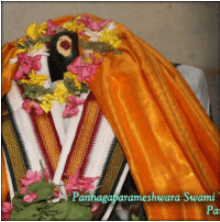
A picture of the the main deity at the Sri Pannagaparameswara Swami Temple.